
DRAUGHT SURVEY
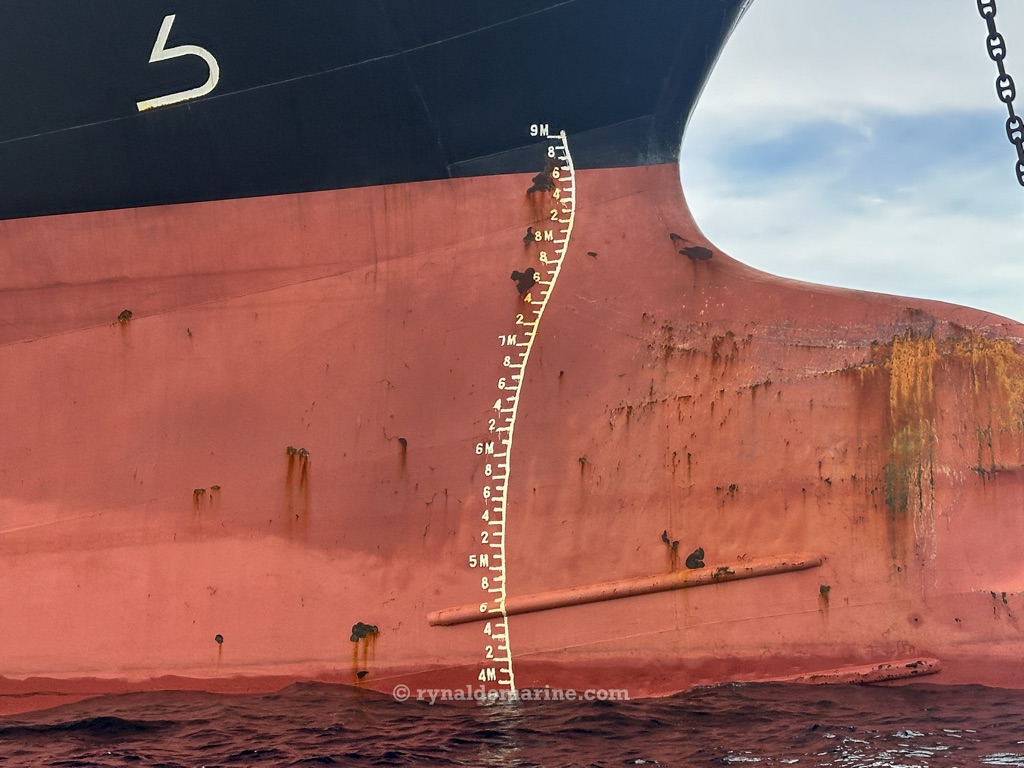
A draught survey determines the weight of bulk cargo loaded or discharged by measuring a vessel’s displacement before and after operations. By reading the draught marks and applying the vessel’s hydrostatic particulars. corrected for density, trim, and all deductibles on board. the cargo quantity is calculated with precision. It is the accepted method for bulk commodities, and its reliability rests entirely on careful reading, accurate measurement, and correct calculation by an experienced surveyor.
- Draught marks read forward, midship & aft - both sides
- All deductibles verified by sounding & calibration tables
- Displacement corrected for density, TPC & LCF
OUR METHOD
Every draught survey we conduct follows a disciplined method, applying the technical principles that determine an accurate and defensible cargo figure.
Draught Reading & Corrections
All six draught marks are read and combined using the quarter mean (mean of means) method, with corrections applied for trim and for hog or sag deflection of the hull. Where ripple or swell obscures the marks, readings are averaged over the wave cycle to obtain a true mean floating condition.

Density & Displacement
Displacement is read from the vessel’s hydrostatic particulars against the corrected mean draught, then adjusted for the observed water density measured by calibrated hydrometer. TPC and LCF are applied where trim correction to displacement is required, ensuring the figure reflects actual conditions at the time of survey.

Deductibles, Soundings & Constant
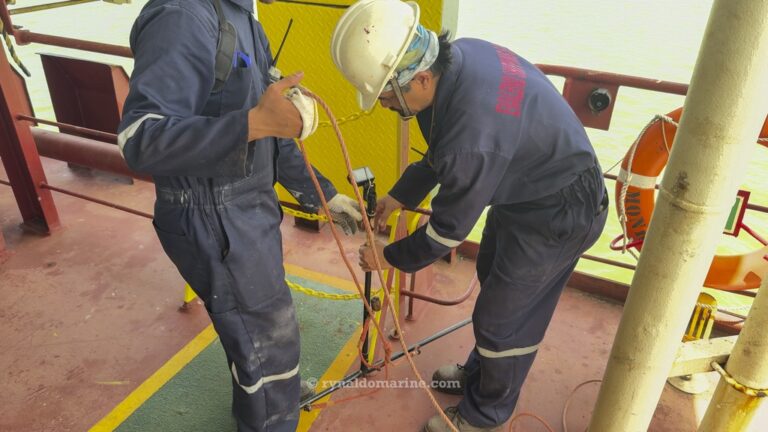
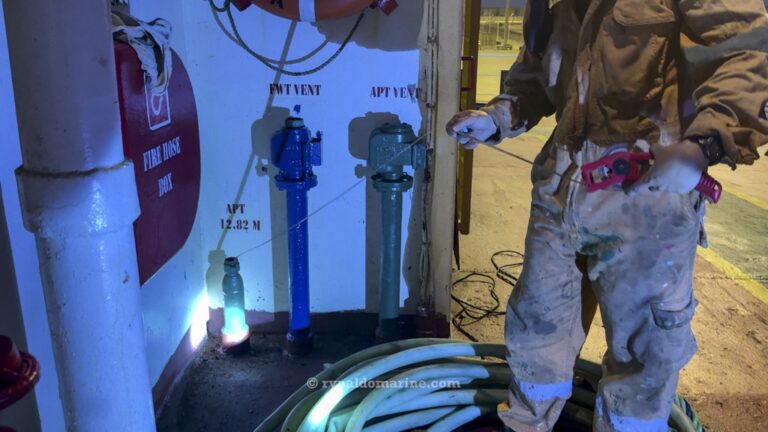
All ballast, fresh water, fuel, diesel and lube oil tanks are sounded and converted to weight via the vessel’s calibration tables, with trim and heel correction. The vessel’s constant is assessed for consistency, as an unexplained variation is a key indicator of measurement error requiring investigation before the survey is finalised.
Cargo Calculation & Reporting
Cargo quantity is derived from the difference in net displacement between the initial and final surveys. All readings, densities, soundings, and corrections are documented in a clear, traceable report, stating the method applied and any limitations such as heavy weather or restricted access observed at the time of attendance.
